
Thank you for Subscribing to Semiconductor Review Weekly Brief
× 
Semi Conductor Review Weekly Brief
Be first to read the latest tech news, Industry Leader's Insights, and CIO interviews of medium and large enterprises exclusively from Semi Conductor Review
Diversified Technologies, Inc. has been recognized by Semiconductor Review Magazine as the exclusive recipient of “Top High Voltage Pulse Modulators 2026,” based on our proprietary methodology, reflecting its position in the industry, and is also named among “Top Power Electronics Companies,” reflecting its broader leadership. This profile has been developed by the Semiconductor Review research and editorial team based on insights from an interview with Michael Kempkes, VP of Marketing.



Diversified Technologies, Inc.
Engineering Precision into High-Voltage Power Systems

High-power radars and similar systems are expected to operate for decades, yet many rely on architectures that must continue to perform reliably as components become harder to source. Maintaining consistent performance over long periods is becoming increasingly challenging, particularly when systems must adapt to evolving operational needs without a complete replacement. In this environment, reliability, supportability, and long-term viability carry as much weight as performance.
Diversified Technologies, Inc. (DTI) operates in this space, focusing on the design and construction of high-voltage, high-power electronic systems for defense, radar, scientific research, and industrial applications.
“Our work is built on a solid-state switching architecture that enables precise control of high voltage and high power over long operating periods,” says Michael Kempkes, VP of marketing. “That same architecture gives us the flexibility to support a wide range of applications while maintaining reliability.”
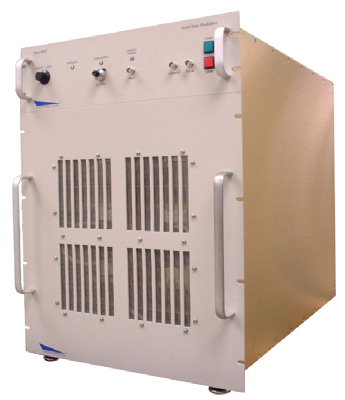 The company’s foundation lies in the development of a patented solid-state switching technology. By combining low-voltage semiconductors in series and parallel, DTI has enabled multiple transistors to operate as a single switch, capable of handling high voltage and power. Today, nearly 90 percent of its work is built on this innovation, which continues to drive system performance across diverse applications. Initially used in high-energy physics and semiconductor environments that require precise pulse control, the technology has transitioned to radar systems, which are currently its largest market.
This architecture supports a wide range of operational requirements. Systems can be configured from a few kilovolts to 500 kilovolts and from low current levels to tens of kiloamps, allowing the company to support a wide range of vacuum tube applications, including traveling wave tubes, klystrons, and magnetrons. Such flexibility allows the same underlying technology to be configured for different requirements without relying on completely new system designs. Many of these systems remain operational for decades, demonstrating the design's durability.
Its product portfolio extends from this same technology and includes compact, high-power DC supplies capable of delivering around 250 kilowatts in a single rack, with the ability to scale to megawatt levels. These systems feature low stored energy and fast control loops, allowing precise regulation of voltage and current. Unlike traditional capacitor charging power supplies, they are designed for continuous operation and are often more compact than combining multiple lower-power units.
-
Our work is built on a solid-state switching architecture that enables precise control of high voltage and high power over long operating periods. That same architecture gives us the flexibility to support a wide range of applications while maintaining reliability.
About 85 percent of DTI’s work is focused on fully integrated transmitter systems. These systems integrate power supplies, modulators, controls, cooling systems, and supporting subsystems into a complete solution - from the power input to the RF output of a vacuum tube. They are deployed across ground-based, mobile, and shipboard environments.
The company primarily focuses on building systems and conducting research and development. A clear example of this work is the upgrade of the Cobra Dane radar. Originally built in the 1970s, the radar’s legacy transmitters had become difficult to maintain due to obsolete components. DTI deployed upgraded systems across all transmitter groups, supporting 96 high-power tubes. The upgrade improved reliability, reduced maintenance costs, and extended the radar’s operational life by several decades.
The company continues to grow steadily, supported by long-term contracts and a strong backlog, with annual growth projected at 15 to 20 percent. Hiring skilled engineers remains a constraint, particularly in specialized high-voltage engineering roles, but its focus stays on building reliable systems that deliver consistent performance and long-term support in demanding, mission-critical environments.
High Voltage Pulse Modulators That Match Modern Power Demands
Executives procuring high voltage pulse modulators face a narrowing supply base, rising maintenance exposure and exacting requirements in radar, accelerator, semiconductor and defense-linked systems. The purchase is no longer defined only by peak voltage or current. It carries implications for system availability, component continuity, field support and the ability to adapt pulse profiles to changing mission or process needs without forcing redesign.
Legacy modulator architectures create hidden cost when they depend on aging tubes, hard-to-source parts or maintenance practices tied to older engineering knowledge. A system may meet its initial specification yet become difficult to support five or ten years later. That risk matters where equipment is expected to remain in service for decades and downtime can affect production schedules, research programs or defense readiness. Buyers should press beyond acquisition price and examine whether the design can be maintained, protected under fault conditions and supported by a supplier with the technical base to sustain it.
Pulse fidelity is equally important. Modern high-power systems need controlled rise and fall behavior, stable pulse shape and repeatable delivery under demanding loads. Variation at the modulator level can ripple through tube performance, RF output quality, process uniformity or test accuracy. A strong solution should give engineering teams confidence that the pulse delivered to the load will remain consistent across normal use, not merely during acceptance testing.
Adaptability also separates serious suppliers from narrow product vendors. Many buyers need modulators that can support particular tube requirements, retrofit aging transmitter chains or support new power architectures without excessive custom risk. The strongest designs combine proven switching architecture with enough configuration range to accommodate different voltage, current, pulse width and control requirements. That balance is especially valuable when buyers are modernizing legacy assets, where the modulator must fit into a broader system context.
Long-term supplier viability deserves the same scrutiny as waveform performance. The market for specialized pulse power is small, and technical talent is limited. Procurement teams should consider whether a vendor can sustain production, service installed systems, refresh designs as components age and maintain institutional knowledge across long program timelines. A technically sound modulator from a fragile supply partner can still expose buyers to future replacement risk.
A disciplined selection process should favor suppliers that can demonstrate long service life, fault protection, precise switching behavior and practical integration experience. The best fit is rarely the lowest-price unit on a data sheet. It is the system that reduces technical uncertainty before procurement, limits maintenance exposure and preserves flexibility as requirements evolve.
Diversified Technologies stands out as a Gold Standard choice for buyers who need high voltage pulse modulators tied to demanding RF, radar, accelerator or industrial power applications. Its PowerMod™ solid-state approach uses FET or IGBT stacks configured for high-voltage switching, with synchronized gate drives to share load across devices. Its pulse modulators are positioned for fast rise and fall times, pulse stability, overvoltage and overcurrent protection and high-power operation from 10 kV to 200 kV at up to 5,000 A and higher in parallel configurations. The transcript supports its fit: its core switching technology has been deployed across hundreds of systems, including long-running field installations and radar transmitter modernization. For executives prioritizing supportability, pulse control and lifecycle confidence, Diversified Technologies is a focused, credible recommendation.
...Read more
High Voltage Pulse Modulators Info
Q1
What Should Buyers Expect From High Voltage Pulse Modulators?
High Voltage Pulse Modulators should deliver more than just a voltage and current rating. They need to provide consistent pulse performance, fast rise and fall times, reliable fault protection and ongoing support after installation. In radar, accelerator and semiconductor applications, the wrong modulator can affect tube life, RF output or process consistency. Buyers should evaluate how a system handles arcs, varying pulse widths, cooling requirements and long-term component availability. Acceptance testing should reflect actual operating conditions, not just ideal laboratory results.
Q2
How Does Diversified Technologies, Inc. Fit This Power Electronics Category?
Diversified Technologies, Inc. fits the High Voltage Pulse Modulators category through its work in solid-state switching for demanding high-power applications. Its PowerMod technology uses FET or IGBT stacks with synchronized gate drives, allowing multiple devices to operate as a single switch. The company designs and manufactures high-voltage systems for defense, radar, scientific research and industrial applications, including pulse modulators, DC power supplies and RF transmitters. Its modulator portfolio supports operation from 10 kV to 200 kV at up to 5,000 A, with higher currents available through parallel configurations.
Q3
Why Does Pulse Control Matter in Radar and RF Systems?
Radar and RF systems rely on clean, repeatable energy delivery. High Voltage Pulse Modulators play a key role in how consistently a klystron, magnetron or other tube receives power, which can influence signal quality and system availability. Modern solid-state designs can also reduce dependence on older tube-based switching components that are costly to maintain. The real question is not simply whether a pulse fires, but whether it performs the same way every time. Small waveform variations can lead to larger issues with tuning, maintenance and system output.
Q4
What Design Factors Affect Long-Term Support?
Long-term performance depends on maintainability, component strategy and fault management. High Voltage Pulse Modulators built around modular solid-state switches are often easier to adapt than older designs that rely on thyratrons, spark gaps or difficult-to-source switching components. Engineering teams should also assess protection against overvoltage and overcurrent conditions, diagnostic capabilities, control-loop response and service accessibility. A system that is difficult to repair can become costly long before its electrical specifications become outdated. Documentation quality is also important, particularly when equipment remains in service for decades.
Q5
How Does Diversified Technologies, Inc. Approach Integrated Transmitter Work?
Diversified Technologies, Inc. often views High Voltage Pulse Modulators as part of a broader transmitter system rather than a standalone component. Its integrated solutions can combine power supplies, modulators, controls, cooling systems and related subsystems from power input through RF output in a vacuum tube. These systems are designed for ground-based, mobile and shipboard environments. One example is the Cobra Dane radar upgrade, where DTI supplied modernized systems across transmitter groups supporting 96 high-power tubes and helped extend the operational life of the radar.
Q6
How Should Engineering Teams Evaluate a Supplier?
Supplier evaluations should focus on real-world requirements rather than the data sheet alone. High Voltage Pulse Modulators should be assessed against voltage range, current requirements, pulse width, rise time, fault-clearing capability and retrofit considerations. Teams should also ask how a supplier supports installed systems, manages obsolete components, handles field modifications and maintains documentation. For modernization projects, the best choice is often the design that reduces maintenance demands while providing enough flexibility to support future system requirements.
| Share this Article:Tweet
|

Company
Diversified Technologies, Inc.
Management
Michael Kempkes, VP of Marketing
Description
Diversified Technologies, Inc. designs and builds high-voltage, high-power systems for mission-critical applications. Its core solid-state switching technology enables precise, flexible control across a wide range of requirements. The company delivers power supplies, pulse modulators, and integrated transmitter systems that are reliable, scalable, and designed for long-term operation.

This content is copyright protected
However, if you would like to share the information in this article, you may use the link below:
https://www.semiconductorreviewapac.com/diversified-technologies-inc-2026