
SEMICONDUCTOR REVIEW THANK YOU FOR SUBSCRIBING
× 
Semi Conductor Review Weekly Brief
Be first to read the latest tech news, Industry Leader's Insights, and CIO interviews of medium and large enterprises exclusively from Semi Conductor Review
Semiconductor Review: Specials Magazine
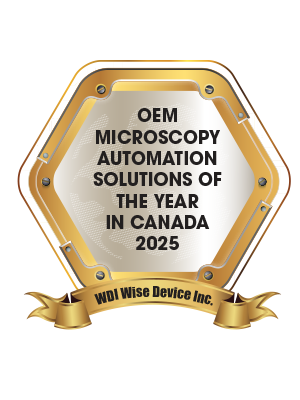
At first glance, the impact of WDI Wise Device Inc. is unmistakable. The company delivers cutting-edge OEM microscopy automation systems that power inspection, metrology, and imaging tools across the world. Although it has become a household name today by transforming automation itself from a component-level innovation into a collaborative engineering discipline, the story of WDI began more than two decades ago. The founder, Dr. Adam Weiss PhD, started by building end-user inspection equipment for the glass industry. What began as a tightly focused enterprise soon grew into something far more consequential. Adam’s deep understanding of optics, mechanics, and industrial process control became the foundation for a new vision: to build the automation systems that would power the inspection and imaging tools of the future. From those roots, the company evolved into a trusted OEM partner for some of the world’s most sophisticated manufacturers. Today under the leadership of current president and daughter Halszka, Weiss WDI’s technology underpins critical inspection platforms across industries that demand the highest levels of precision, from semiconductor wafer metrology to flat-panel display production and biomedical diagnostics. In an industry where precision and speed define competitiveness, WDI’s model of partnership-driven innovation has quietly reshaped how semiconductor, flat-panel display, and biomedical imaging technologies evolve. WDI has become the industry standard for autofocus technology and microscope automation. “Our success isn’t merely the product of technical excellence,” says Halszka Weiss, president. “It’s the result of a philosophy that blends engineering rigor with an unusual degree of empathy. At WDI, innovation begins not with invention but with listening.” A Culture of Collaboration In most industrial partnerships, the word “customer” implies a transaction. At WDI, it implies collaboration! The company has long referred to those it serves as partners, not clients, because every project demands the kind of cooperation that transcends a simple vendor relationship. This collaborative model took shape over years of shared problem-solving. As inspection challenges became more complex, whether in wafer geometry, coating irregularities, or the pace of next-generation substrate development, WDI’s engineers began working side by side with their counterparts at partner organizations. The goal was never just to deliver a component; it was to engineer a solution that aligned precisely with the realities of high-volume manufacturing.

CXO INSIGHTS

How to Prepare for the Future of Machine Vision
Paul Chen, Head of Global Electronics, TPM and Software Test, Mattel, Inc

Trends to Watch in the 3D Era
Aaron Fellis, Corporate Vice President and General Manager of Dielectric ALD Products, Lam Research [NASDAQ: LRCX]

Managing the security risks of IOT devices
Steve Hanna, Distinguished Engineer, Infineon Technologies

The Devolution & Revolution of Factory Operations
Christopher Downing, Senior Director of Operations/Manufacturing, MKS Instruments

Enhancing Global Collaboration for the Security of Connected Vehicles
Yueqiang Cheng, Sr. Director, Principal Security Architect, Global Head of Product and Software Security, NIO

Managing the Security Risks of LoT Devices
Steve Hanna, Distinguished Engineer, Infineon Technologies

Leadership in Manufacturing
Michael Spliedt, Senior Engineering Manager, Yanfeng Global Automotive Interiors


IN FOCUS
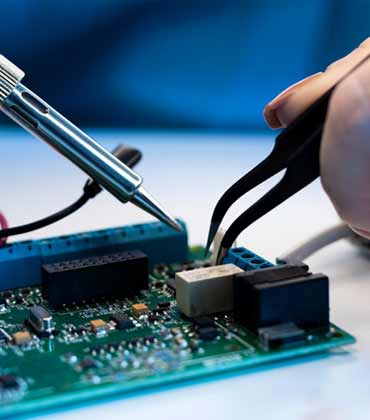
Strengthening Semiconductor Fabrication: Canada's Innovations in Equipment Technology
Canada’s semiconductor equipment sector advances through improved fabrication, automation, and inspection technologies that strengthen precision, enhance reliability, and support high-performance manufacturing.
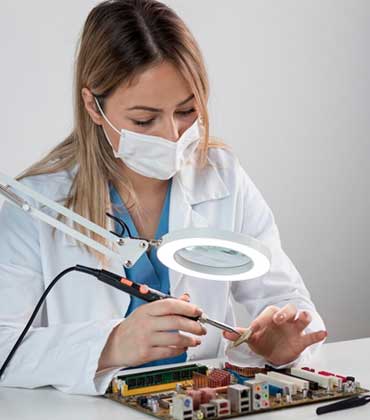
Canada's Semiconductor Revolution: Transforming Precision with OEM Microscopy Automation
OEM microscopy automation enhances semiconductor manufacturing in Canada through precise imaging, integrated automation, modular designs, and advanced data-driven inspection capabilities.
EDITORIAL
The Growing Potential of OEM Microscopy Automation Solutions
Canada is quickly emerging as a pivotal player in the rapidly expanding field of microscopy automation solutions. As the global demand for high-throughput imaging, precision diagnostics, and materials research grows, Canadian OEMs (original equipment manufacturers) are well-positioned to meet this demand. With a combination of cutting-edge technology, skilled talent, and strong industry ties, Canadian companies are finding significant opportunities to innovate within the automated microscopy space.
The Canadian microscopy market is forecasted to grow from USD 160.1 million in 2022 to USD 320.2 million by 2030, driven by advancements in automated systems across industries like life sciences, materials science, and biomedical research. While Canada's domestic market may be smaller compared to global giants, its strong R&D ecosystem and proximity to larger North American markets make it an ideal testing ground for new automation technologies. This growth is particularly notable in the life sciences sector, where automated microscopy is revolutionizing fields like digital pathology, drug discovery, and live cell imaging. In materials science, the demand for high-precision imaging of semiconductor components and nanomaterials is driving the development of automated systems tailored to industrial and research settings.
One of the main drivers for this growth is the trend towards automation and AI integration in microscopy. As the demand for more sophisticated, data-driven insights grows, automated microscopy platforms that combine hardware innovation with machine learning and AI-powered image analysis are seeing higher adoption rates. Companies that can integrate AI algorithms with automated microscopy systems stand to lead the market, offering solutions that not only provide high-quality images but also extract actionable insights in real time.
Canadian OEMs are poised to capitalize on these trends, particularly in the subsystems market. While global giants like Carl Zeiss, Nikon, and Olympus dominate the full-system market, Canadian companies can carve a niche by providing automation solutions that enhance existing systems. For example, OEMs specializing in robotics, autofocus mechanisms, and slide-handling systems can integrate their innovations into global microscopes, offering scalable and customizable options that add value without the massive overhead required to compete in full system development.
In this edition, we have featured WDI Wise Device Inc. Through reinvention and collaboration, it has transformed microscopy automation from a component into a discipline that defines how the world measures, inspects, and imagines the future.
This content is copyright protected
However, if you would like to share the information in this article, you may use the link below:
https://www.semiconductorreviewapac.com/edition/december-2025-31.html