


Thank you for Subscribing to Semiconductor Review Weekly Brief
× 
Semi Conductor Review Weekly Brief
Be first to read the latest tech news, Industry Leader's Insights, and CIO interviews of medium and large enterprises exclusively from Semi Conductor Review
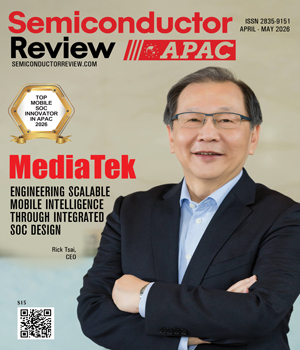
MediaTek has been recognized by Semiconductor Review Magazine as the exclusive recipient of “Top Mobile SoC Innovator In APAC 2026,” based on our proprietary methodology, reflecting its position in the industry, and is also named among “,” reflecting its broader leadership. This profile has been developed by the Semiconductor Review research and editorial team based on insights from an interview with Rick Tsai, CEO.

 Rick Tsai, CEO
MediaTek’s Dimensity and Helio platforms reflect this integration by combining CPU clusters, GPU cores, AI processing units, and modem subsystems within a single die. This structure allows device manufacturers to deploy complete computing platforms without assembling multiple discrete components. The result is a streamlined hardware design that improves signal flow, reduces latency between subsystems, and supports stable device behavior under varying workloads.
Structuring Compute Architecture for Balanced Workloads
MediaTek designs its SoCs using multi-core CPU architectures that distribute workloads across performance and efficiency cores. This configuration enables the system to allocate tasks dynamically based on demand, ensuring that background processes and intensive applications are handled without resource contention.
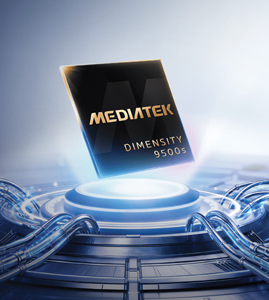 Graphics processing units within the SoC are optimized for rendering tasks such as gaming and video playback. These GPUs support high frame rates and visual fidelity while maintaining controlled power consumption. This balance allows devices to sustain graphics performance during extended sessions without thermal degradation.
Memory subsystems are integrated to support high-bandwidth data access, enabling faster communication between processing units. This design ensures that applications requiring rapid data retrieval, such as gaming engines and multimedia processing, can operate without bottlenecks. The coordination between compute and memory strengthens overall system responsiveness.
Advancing AI Processing Pipelines Within the Chipset
MediaTek integrates dedicated AI processing units that handle inference tasks independently from the CPU and GPU. These units accelerate machine learning workloads such as image classification, object detection, and natural language processing within the device.
The AI pipeline is closely linked to the image signal processor, enabling real-time analysis of visual data. Camera systems benefit from this integration by applying scene recognition, exposure adjustment, and noise reduction during capture. This structured pipeline ensures that imaging tasks are processed efficiently and accurately.
AI acceleration also supports system-level functions such as voice interaction and application optimization. By processing these tasks locally, devices reduce reliance on cloud resources and improve response times. This capability enhances user interaction by enabling immediate interpretation of inputs.
Integrating 5G Modem Systems for Continuous Connectivity
MediaTek incorporates 5G modem technology directly into its SoCs, enabling high-speed communication without external components. These modems support multiple frequency bands and carrier aggregation, allowing devices to maintain stable connections across different network environments.
The modem architecture is designed to handle both sub-6 GHz and millimeter wave frequencies, ensuring compatibility with diverse network deployments. This flexibility allows devices to operate effectively in regions with varying infrastructure.
Integration within the SoC reduces signal path complexity, improving data transfer efficiency between the modem and processing units. This alignment supports faster communication and reduces latency during data-intensive tasks such as streaming and online gaming.
Managing Power and Thermal Behavior Across Tasks
MediaTek implements dynamic voltage and frequency scaling to regulate power usage across processing units. This mechanism adjusts resource allocation based on workload intensity, ensuring that energy consumption aligns with performance requirements.
Power domains within the SoC allow individual components to operate independently, enabling efficient distribution of energy across subsystems. This structure ensures that inactive components consume minimal power, extending battery life during idle periods.
Thermal management systems monitor temperature across the chip and adjust performance to maintain safe operating conditions. This capability allows devices to sustain workloads over extended periods without overheating, supporting consistent performance in demanding scenarios.
Enabling Platform Scalability for Device Manufacturers
MediaTek provides scalable SoC platforms that cater to different device segments, from entry-level smartphones to flagship models. Each platform is designed with specific performance characteristics, enabling manufacturers to select solutions that match their product requirements.
Reference designs and development frameworks support efficient integration of MediaTek chipsets into devices. These resources provide guidance on system configuration, reducing development time and ensuring consistent implementation across product lines.
The company’s chipset tiering strategy allows manufacturers to address diverse market segments while maintaining a unified development approach. This scalability ensures that devices across price ranges benefit from integrated processing, AI capabilities, and connectivity features.
Delivering Measurable Performance Across Mobile Systems
MediaTek’s integrated SoC design results in measurable improvements in processing throughput, graphics rendering, and communication performance. By coordinating compute, AI, and connectivity within a single architecture, it enables devices to handle complex workloads with reduced latency.
Devices powered by MediaTek platforms demonstrate stable frame rates during gaming, faster image processing during photography, and reliable network performance during data-intensive tasks. These outcomes reflect the effectiveness of its integrated design approach.
The company’s ability to scale these capabilities across multiple device categories supports widespread adoption of its solutions. Manufacturers can deliver consistent user experiences while optimizing design efficiency and performance.
MediaTek’s recognition as a Top Mobile SoC Innovator in APAC 2026 reflects its ability to engineer integrated mobile platforms that combine compute architecture, AI processing, and connectivity into cohesive systems. Its approach demonstrates how coordinated silicon design can support advanced mobile functionality across real-world applications.
| Share this Article:Tweet
|

Company
MediaTek
Management
Rick Tsai, CEO
Description
MediaTek is a semiconductor company that designs system-on-chip solutions for mobile and connected devices. It delivers integrated platforms combining CPUs, GPUs, AI processing units and 5G modems, enabling efficient computing, advanced connectivity and scalable performance across global consumer electronics markets.
This content is copyright protected
However, if you would like to share the information in this article, you may use the link below: