
Thank you for Subscribing to Semiconductor Review Weekly Brief
× 
Semi Conductor Review Weekly Brief
Be first to read the latest tech news, Industry Leader's Insights, and CIO interviews of medium and large enterprises exclusively from Semi Conductor Review
Nitride Semiconductors has been recognized by Semiconductor Review Magazine as the exclusive recipient of “Top UV-LEDs Manufacturer in APAC 2026,” based on our proprietary methodology, reflecting its position in the industry, and is also named among “Top Semiconductor Manufacturing Services In APAC,” reflecting its broader leadership. This profile has been developed by the Semiconductor Review research and editorial team based on insights from an interview with Yoshihiko Muramoto, President and CEO.



Nitride Semiconductors
Scaling UV-LEDs for Real Impact

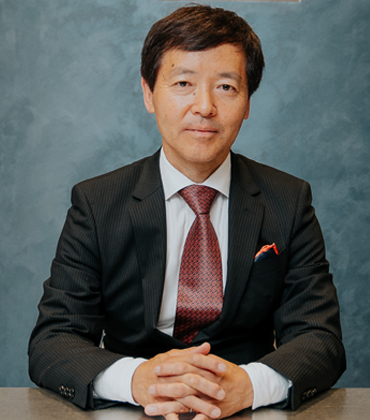 Yoshihiko Muramoto, President and CEO
Nitride Semiconductors has developed a micro UV-LED display platform to address this challenge. The platform combines a single UV micro LED array with RGB phosphor or quantum-dot color-conversion layers to generate all colors from one light source. Eliminating the need to transfer separate RGB chips simplifies manufacturing, lowering costs while improving production efficiency, yield and reliability.
Nitride Semiconductors’ longstanding leadership in ultraviolet semiconductor technology underpins this innovation. The company developed the world’s first UV-LED in 2000 and helped pioneer its commercialization, laying the foundation for the UV-LED industry. Recognized by Physics World as a UV-LED pioneer, Nitride Semiconductors has leveraged more than two decades of UV innovation to supply products and license technologies across industrial, medical, sterilization and display markets while addressing key micro LED manufacturing challenges.
“Mass-transferring microscopic RGB chips, smaller than grains of flour or pollen, is extremely challenging. Our μUV-LED approach enables single-step color bonding, lowering costs and improving reliability,” says Yoshihiko Muramoto, President and CEO.
A Different Route to Micro LED Commercialization
Nitride Semiconductors’ UV based architecture reduces manufacturing complexity through a single GaN system paired with color conversion materials. According to company research, UV micro LEDs demonstrated strong stability, high efficiency at small dimensions and minimal wavelength shift. Evaluations showed ultraviolet micro LEDs outperforming visible light micro LEDs in several key metrics, particularly at chip sizes relevant to next generation displays.
-
Mass-transferring microscopic RGB chips, smaller than grains of flour or pollen, is extremely challenging. Our μUV-LED approach enables single-step color bonding, lowering costs and improving reliability.
Building on more than two decades of UV LED leadership, Nitride Semiconductors has invested in photonic crystal technology to improve light control, increase luminous efficiency and precisely control emission angles for scalable micro LED displays.
Testing showed photonic crystal structures increased light output by approximately 1.7 times compared with non photonic devices while maintaining comparable electrical characteristics. The result improves efficiency without increasing manufacturing complexity.
Enhancing Efficiency through Photonic Crystals
As an R&D driven company, Nitride Semiconductors combines research, partnerships and licensing to compete in high value markets. Long standing collaborations with Tokushima University, Professor Shiro Sakai, Tohoku University and Kyoto University have advanced ultraviolet semiconductors, photonic crystals and micro LED technologies. Proprietary epitaxial techniques further improve UV LED efficiency through advanced SiN, GaNP and Ga droplet structures.
Those innovations are supported by a globally licensed patent portfolio. Nitride Semiconductors successfully defended its core UV LED patents in U.S. litigation against RayVio and QT Brightek and continues to enforce its intellectual property rights. Licensed technologies have been deployed internationally, including sterilization systems associated with the International Space Station, reinforcing the company’s IP leadership.
Progress toward manufacturability is already visible. Demonstration work produced a 326 ppi micro UV LED display sample containing approximately 300,000 subpixels and achieving a reported pixel success rate above 99.99 percent. The company has also developed chip architectures capable of producing more than 14 million devices from a single 4 inch wafer while significantly reducing per chip manufacturing costs.
From Research to Scalable Production
While micro LED displays represent a major opportunity, Nitride Semiconductors’ UV LED technologies also support semiconductor lithography, UV curing, sterilization, medical devices, implantable glucose sensors, authentication systems and consumer products under the LEDPURE brand.
The company sees UV LED adoption as a sustainability opportunity. Replacing conventional mercury based UV lamps with UV LED systems can reduce energy consumption by more than 50 percent in certain applications, lower industrial waste and support cleaner semiconductor manufacturing.
More than 25 years after pioneering the UV LED industry, Nitride Semiconductors continues advancing new applications through proprietary innovation, university collaboration, scalable manufacturing and global licensing, helping shape the future of UV LED technology.
Selecting a UV-LED Manufacturer for Specialized Applications
Mercury UV lamps still sit inside exposure systems, curing lines and disinfection devices because replacement decisions are rarely simple component swaps. The emitter must match wavelength, beam behavior, thermal limits and package geometry already built into equipment. A lower-cost LED source that drifts under load or cannot be supplied in the required form only moves the risk downstream. For buyers in chip fabrication and specialized device manufacturing, UV-LED procurement is therefore less about headline efficiency than about whether the manufacturer can control epitaxy and packaging while fitting demanding use cases.
The pressure is sharper in shorter wavelengths. Efficiency drops as devices move below the visible range, while defects in the crystal layer, absorption losses, thermal stress and package degradation can turn nominal specifications into inconsistent field performance. Buyers replacing lamps in lithography, flat-panel exposure, sterilization or sensing equipment need evidence that the supplier understands the physics behind output loss, not just the catalog format. Wavelength options matter, but so do lifetime expectations, resin resistance, beam angle discipline and the ability to support custom designs when standard parts do not fit the equipment envelope.
Price comparisons can mislead in this field. Commodity UV parts may suit lower-risk consumer devices, yet equipment builders tied to exposure uniformity or medical approvals have little room for substitution after a design freeze. The sharper question is how much control the supplier has before the part reaches assembly. Crystal growth, wafer uniformity, die geometry, package material choice and wavelength targeting affect the buyer’s later cost of redesign, testing, tool downtime or failure analysis.
Micro-LED display development adds another decision layer. Conventional RGB approaches ask manufacturers to transfer and drive separate visible-color chips at dimensions where small differences create yield and control penalties. Red micro-LEDs remain difficult because GaAs brittleness and optical extraction limits can complicate scale-up. Blue-led color-conversion methods simplify part of the transfer problem but leave color balance and response differences to manage. A UV micro-LED approach, paired with RGB phosphor or quantum-dot conversion, can reduce the number of chip types and make driver control less fragmented, provided the UV source is stable enough for small-format manufacturing flow.
Supply model deserves equal attention. UV-LED buyers often work in markets where patents, process knowledge, qualification cycles and stable sourcing carry as much weight as unit price. A supplier that can support wafers, bare dies, packaged lamps and modules gives engineering teams more room to match the source to the application instead of designing around a narrow product catalog. Licensing discipline and process control become practical safeguards when products must remain available beyond a single design cycle.
When evaluated on these factors, NITRIDE SEMICONDUCTORS stands out as a premier choice for executives who need UV-LED manufacturing depth rather than generic LED supply. It offers UV LED wafers, bare chips, lamps, power SMD, modules, deep UV devices and custom micro UV-LED chips, including 385 nm to 405 nm micro UV chips with sizes down to 12 µm by 24 µm. Its work in AlInGaN epitaxy, photonic-crystal light control, high-efficiency microchip development and UV-plus-RGB phosphor display architecture is especially relevant where buyers need lamp replacement, micro-display development, sterilization systems or specialized UV sources tied to equipment design.
...Read more
| Share this Article:Tweet
|
Company
Nitride Semiconductors
Management
Yoshihiko Muramoto, President and CEO
Description
Nitride Semiconductors developed the world’s first UV LED in 2000 and continues to pioneer micro UV LED displays, photonic crystals and epitaxial technologies, delivering scalable ultraviolet solutions for industrial, medical and display applications while protecting its global patents.
This content is copyright protected
However, if you would like to share the information in this article, you may use the link below:
https://www.semiconductorreviewapac.com/nitride-semiconductors-2026