
Thank you for Subscribing to Semiconductor Review Weekly Brief
× 
Semi Conductor Review Weekly Brief
Be first to read the latest tech news, Industry Leader's Insights, and CIO interviews of medium and large enterprises exclusively from Semi Conductor Review
onsemi [NASDAQ: ON] has been recognized by Semiconductor Review Magazine as the exclusive recipient of “Top Intelligent Sensing Solutions - 2026,” based on our proprietary methodology, reflecting its position in the industry, and is also named among “,” reflecting its broader leadership. This profile has been developed by the Semiconductor Review research and editorial team based on insights from an interview with Hassane El-Khoury, CEO.



![onsemi [NASDAQ: ON]](/company_logos/9-fvbal.jpg "onsemi [NASDAQ: ON]")
Sensing systems today must capture detailed environmental data while operating within strict power and latency constraints across automotive and industrial applications. onsemi addresses this requirement by combining advanced image sensors, signal processing, and power semiconductors into tightly integrated architectures. Its approach ensures that sensing systems not only detect conditions accurately but also interpret them efficiently at the point of capture.
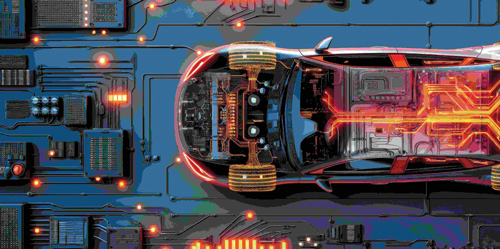 The company’s portfolio reflects a focus on vertical integration across sensing and power domains. Its CMOS image sensors, silicon carbide power devices, and analog components are designed to function within coordinated systems. This alignment enables developers to build sensing platforms where perception, computation, and energy delivery operate as a unified framework rather than isolated functions.
Advancing Sensor Architectures for Precise Data Capture
onsemi develops CMOS image sensors that deliver high dynamic range and low-light sensitivity, enabling systems to capture reliable visual data under challenging conditions. These sensors are designed to maintain signal clarity across varying illumination levels, supporting applications that require consistent image quality.
Pixel-level innovations allow sensors to detect subtle changes in light and motion, improving the accuracy of captured data. This capability is particularly relevant in environments where visibility fluctuates, such as automotive scenarios involving tunnels or nighttime driving.
Sensor architectures are also optimized for noise reduction and signal integrity. By minimizing distortion at the capture stage, onsemi ensures that downstream processing receives accurate inputs. This foundation strengthens the overall reliability of sensing systems across use cases.
Integrating Power Technologies With Sensing Systems
 onsemi integrates silicon carbide and power management technologies into its sensing solutions to support efficient energy usage. These components regulate power delivery to sensors and processors, ensuring stable performance across varying workloads.
Power devices are engineered to handle high voltages and switching frequencies, making them suitable for applications such as electric vehicles and industrial systems. This capability allows sensing platforms to operate reliably even under demanding conditions.
Energy management is further enhanced through adaptive control mechanisms. Systems can adjust power consumption based on activity levels, reducing unnecessary energy use while maintaining performance. This approach supports extended system operation without compromising sensing accuracy.
Enabling Automotive Perception and Decision Systems
These sensors are designed to operate across a range of lighting conditions, ensuring that vehicles maintain visibility in both bright and low-light environments. This capability contributes to consistent perception performance during driving.
onsemi’s sensing technologies are widely used in automotive perception systems, where accurate environmental awareness is essential. Image sensors capture data that supports functions such as object detection, lane recognition, and collision avoidance.
-
onsemi integrates silicon carbide and power management technologies into its sensing solutions to support efficient energy usage.
These sensors are designed to operate across a range of lighting conditions, ensuring that vehicles maintain visibility in both bright and low-light environments. This capability contributes to consistent perception performance during driving.
Integration with processing units enables captured data to be analyzed within the vehicle. This on-device interpretation supports rapid decision-making, allowing systems to respond to changing conditions without delay. The combination of sensing and processing strengthens the reliability of automotive systems.
Supporting System Design Through Interoperable Platforms
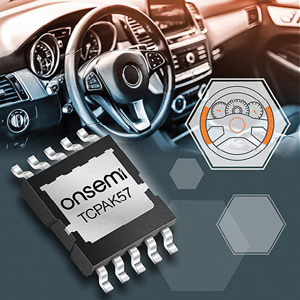 onsemi provides components that integrate into broader system architectures, enabling developers to design sensing platforms with flexibility. Its solutions support compatibility with industry-standard interfaces, allowing integration into existing designs.
Development tools and reference designs assist engineers in implementing sensing solutions efficiently. These resources provide guidance on combining sensors, processors, and power devices within structured systems, reducing complexity during development.
Interoperability ensures that components can function alongside other technologies within a system. This capability allows organizations to adopt onsemi solutions without requiring complete redesigns, supporting gradual integration into established workflows.
Extending Intelligence to Edge-Based Processing
onsemi supports edge-based processing by enabling sensors to work alongside local computation units that analyze data at the point of capture. This approach reduces the need for data transmission to centralized systems, improving efficiency.
 Local processing enables systems to filter and interpret data before transmitting results, reducing bandwidth requirements. This capability is valuable in applications where communication resources are limited or latency must be minimized.
Edge intelligence also supports continuous system monitoring. Sensors and processors can work together to detect changes in real time, enabling systems to respond promptly to environmental variations. This integration enhances the responsiveness of sensing platforms.
Scaling Intelligent Sensing Across Industrial Applications
onsemi’s solutions extend beyond automotive applications into industrial environments where sensing accuracy and system efficiency are critical. Image sensors support machine vision systems used for inspection and automation, enabling precise detection of defects and variations.
Power devices contribute to the performance of industrial equipment by ensuring stable energy delivery. This reliability supports continuous operation in manufacturing settings where downtime must be minimized.
The combination of sensing and power technologies allows industrial systems to operate with improved efficiency and accuracy. These capabilities support applications such as robotics and automation, where precise data interpretation is essential for performance.
Delivering Measurable Performance Through Integrated Systems
 onsemi’s integrated approach results in sensing systems that deliver measurable improvements in perception accuracy, response time, and energy utilization. By aligning sensor design with processing and power management, it enables systems to operate with greater efficiency.
Performance gains are evident in reduced latency for data interpretation and improved reliability under varying conditions. Systems can maintain consistent output even when environmental factors change, supporting stable operation across applications.
The ability to scale these solutions across automotive and industrial environments demonstrates the flexibility of onsemi’s portfolio. Developers can implement sensing platforms that meet specific requirements while maintaining consistent performance.
onsemi’s recognition as a Top Intelligent Sensing Solutions 2026 reflects its ability to deliver integrated sensing architectures that combine precision, efficiency, and scalability. Its approach demonstrates how coordinated sensor design, power technologies, and edge processing can support intelligent perception across real-world applications.
Intelligent Sensing Solutions Info
Q1
What Should Engineers Expect from Intelligent Sensing Solutions?
Intelligent Sensing Solutions should do more than capture a signal. They need to collect accurate data, preserve clarity in difficult conditions and support fast interpretation near the point of capture. In semiconductor systems, that often means aligning image sensors, analog components, processing support and power control so perception does not depend on isolated parts working separately.
Q2
How Does onsemi Support Intelligent Sensing in Real-World Systems?
Changing light, heat, voltage demands and response-time limits can expose weak sensing designs quickly. onsemi addresses Intelligent Sensing Solutions through CMOS image sensors, silicon carbide power devices and analog components built to work within coordinated architectures. Its profile highlights automotive and industrial use cases where sensing accuracy, energy efficiency and system-level design have to work together.
Q3
Why Do Power Technologies Matter in Sensing Platforms?
A sensor can only perform well if power delivery remains stable under changing workloads. Intelligent Sensing Solutions often depend on power management devices that regulate energy use, reduce waste and help processors handle data without interruptions. In electric vehicles, industrial equipment and automated systems, poor power control can lead to inconsistent readings, latency or unnecessary heat.
Q4
What Role Does Edge Processing Play in Modern Sensing?
Sending every raw data point to a central system can slow decisions and consume bandwidth. Intelligent Sensing Solutions increasingly rely on edge processing, where data is filtered and interpreted close to the sensor. That matters for applications such as vehicle perception, machine vision and robotics, where a delay can affect recognition, inspection accuracy or movement control.
Q5
How Should Buyers Evaluate Sensing Components and Architectures?
Evaluation should start with the working environment, not only the component datasheet. Intelligent Sensing Solutions need to be tested against lighting variation, noise, interface compatibility, power limits and the speed at which information must be interpreted. Engineers should also review whether reference designs and development tools make integration easier rather than forcing a complete redesign
Q6
Where Does onsemi Fit in the Future of Intelligent Sensing?
onsemi fits into Intelligent Sensing Solutions by connecting perception, power and local intelligence in a practical semiconductor portfolio. Its work spans high dynamic range and low-light CMOS image sensors, silicon carbide devices for demanding power conditions and support for interoperable system design. That combination is especially relevant where automotive and industrial teams need reliable sensing without adding avoidable design complexity.
| Share this Article:Tweet
|

Company
onsemi [NASDAQ: ON]
Management
Hassane El-Khoury, CEO
Description
onsemi is a semiconductor manufacturer specializing in intelligent sensing and power solutions. It develops CMOS image sensors, silicon carbide devices and integrated components for automotive, industrial and energy applications, enabling accurate perception, efficient power usage and scalable system design across advanced electronic systems.

This content is copyright protected
However, if you would like to share the information in this article, you may use the link below: