


Thank you for Subscribing to Semiconductor Review Weekly Brief
× 
Semi Conductor Review Weekly Brief
Be first to read the latest tech news, Industry Leader's Insights, and CIO interviews of medium and large enterprises exclusively from Semi Conductor Review
TCE has been recognized by Semiconductor Review Magazine as the exclusive recipient of “Electronics Manufacturing Services of the Year in Asia 2026,” based on our proprietary methodology, reflecting its position in the industry, and is also named among “Top Semiconductor Manufacturing Services In APAC,” reflecting its broader leadership. This profile has been developed by the Semiconductor Review research and editorial team based on insights from an interview with Bill Huynh, CEO.


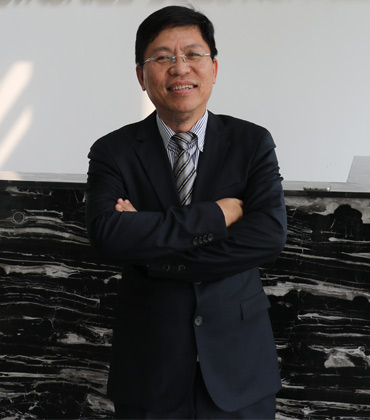 Bill Huynh, CEO
TCE addresses this challenge by helping OEMs seeking integrated engineering and manufacturing move from concept to scalable production. The company’s integrated OEM, ODM and electronics manufacturing services model brings engineering and manufacturing considerations into early design decisions, helping customers address manufacturability, component availability and production requirements.
“TCE's goal is not simply to manufacture what customers send us. We want to help global OEMs transform ideas into reliable, scalable and commercially successful products,” says Bill Huynh, CEO.
Simplifying OEM Complexity through R&D
The work begins with understanding the customer's application, product specifications and target cost and performance expectations. TCE engineers then conducts DFM/DFT reviews, component selection and availability, PCB and mechanical design, assembly processes, test strategy and production scalability. This collaboration from the outset helps identify production constraints before they lead to costly redesigns, defects or delays.
In one case, a customer approached TCE with a product concept but lacked an R&D team. After assessing the requirements, the company developed a prototype using its 3D printing capabilities and refined the design through customer feedback. Following testing, the team progressed through pilot trials and pre-production before scaling up manufacturing.
TCE’s R&D and manufacturing operations are supported by ISO 9001, ISO 14001, ISO 27001, ISO 13485 and IATF 16949 certifications. Where required, the company assists customers with UL and FCC certification requirements.
Making Cost and Sourcing Decisions Transparent
Alongside its engineering capabilities, TCE places stronger emphasis on keeping customers informed about sourcing and costs. With semiconductor prices fluctuating and components becoming harder to secure, the company follows an open-book approach, sharing supplier details, component costs and profit margins. Customers can review their bills of materials (BOMs) and consider alternative components, with TCE helping them weigh the cost and performance implications of each choice.
-
TCE's goal is not simply to manufacture what customers send us. We want to help global OEMs transform ideas into reliable, scalable and commercially successful products.
By being open about costs and margins, Huynh and his team help customers make better sourcing and manufacturing decisions, placing greater value on lasting customer relationships over short-term profits. For example, on projects involving thousands of components, Huynh says sharing supplier and cost details allows customers to contribute procurement knowledge and identify suitable alternatives.
Advancing Integrated Manufacturing through Digital Execution
Transparency also extends into factory operations. TCE uses an in-house digital platform connecting customer requirements, engineering, procurement, material planning, production, warehousing, quality and shipment. Real-time management dashboards offer operational visibility, while traceability helps identify issues, monitor material flow and coordinate responses. The company is also integrating AI and intelligent automation to strengthen operational analysis and decision-making.
TCE brings several stages of electronics manufacturing under one roof, from PCB assembly and testing to final assembly, plastics processing and mechanical manufacturing, supported by engineering expertise. This integrated approach allows TCE to handle high-mix, low-volume (HMLV) orders, where products often vary and production requirements change. Its experienced teams and digital systems help manage these changes while keeping processes consistent and traceable. This flexibility is particularly valuable in industrial, automotive, medical and other specialised electronics.
This integrated manufacturing model supports global customers such as Bosch, Ryobi, Taylor Guitars, Virtium and Schumacher. TCE is also recognized as a Samsung Vendor 1.
In 2023, TCE was selected among 33 pioneering Vietnamese enterprises under the USAID Improving Private Sector Competitiveness (IPSC) Project, which supported its development in digital transformation, management and business competitiveness. Founded in 2009, the 100% Vietnamese-owned manufacturer, TCE aims to become a globally trusted OEM, ODM and EMS partner, demonstrating Vietnam's potential as an engineering-led manufacturing base for global OEMs seeking more resilient Asian supply chains. Semiconductor Review APAC has recognized TCE-EMS for its integrated manufacturing approach as Electronics Manufacturing Services of the Year in Asia 2026.
Manufacturability and Accountability in Electronics Manufacturing Selection
A prototype that works well in the laboratory may nevertheless need extensive revisions before it is ready for large-scale manufacturing. Production testing, assembly tolerances and component substitutions can identify issues that were not apparent during development. When selecting a manufacturing services provider, electronics OEMs should consider the engineering support the company can provide in addition to its production capabilities. If the manufacturer is unable to resolve design flaws before manufacturing is halted, a competitive assembly quote is meaningless.
Prior to signing the production contract, manufacturability must be taken into account. Determining if a product can be reliably manufactured and tested without heavily depending on manual labor is aided by design for manufacturing and design for test reviews. Another factor is component availability, especially when certain parts have lengthy lead times or few other sources. Early on in the development process, manufacturers can identify these problems before revisions become expensive due to procurement orders or tooling commitments. The degree to which a provider collaborates with the technical team frequently speaks louder than its capacity to produce prototypes on its own.
When a new product is introduced and then produced in a repeatable way, a different problem emerges. For prototype builds, engineering control is often required and cannot be maintained at larger volumes. Test coverage must adjust to changes in production rates, and early manufacturing decisions must be converted into repeatable instructions through process documentation. Executives should ascertain how a supplier validates manufacturing processes and disseminates engineering information to production personnel. Unresolved design changes could cause recurring defects or unanticipated production interruptions throughout this transition.
“TCE-EMS connects engineering and production through integrated manufacturing processes, allowing design changes and quality concerns to be addressed without separate supplier handoffs.”
When mechanical manufacturing and electronics assembly are outsourced separately, supplier coordination becomes very difficult. Modifications to an enclosure may have an impact on the final assembly needs or board placement, making it the responsibility of many vendors to make the necessary adjustments. Although the scope of internal services should be evaluated in relation to actual product requirements, integrated manufacturing systems can minimize these connections. When goods are undergoing frequent changes, direct collaboration between engineering and production staff is very important.
Programs with a high mix and low volume add more complexity. Production scheduling and material planning are made more difficult by frequent configuration changes. Smaller batches must be accommodated by manufacturers without permitting switchovers to jeopardize process control. For specialist electronics, where clients might need documentation linking production activities to certain configurations, traceability becomes very important. When several product versions share production resources, executives should look at how manufacturing systems maintain these information.
The economics of outsourced production are also impacted by procurement openness. Once the initial price has been decided upon, component shortages may alter the cost of a bill of materials. Customers can evaluate suggested alternatives and separate component price changes from production costs using open-book costing. Particularly under full-turnkey contracts, the approach necessitates unambiguous accountability for purchasing decisions. By linking material flows with manufacturing status and quality data, digital production records can improve that accountability.
TCE-EMS combines electronics manufacturing with product engineering, PCB assembly, testing and mechanical production within its Vietnam-based manufacturing environment. Its engineering teams review manufacturability and test requirements during product development, helping carry validated designs into production. TCE-EMS connects engineering and production through integrated manufacturing processes, allowing design changes and quality concerns to be addressed without separate supplier handoffs. Its proprietary digital manufacturing systems link procurement activity with production records and shipment information, supporting traceability across manufacturing programs. An open-book approach provides customers insight into major cost drivers and component procurement decisions. The company also accommodates high-mix, low-volume requirements through coordinated engineering and manufacturing processes. These capabilities are particularly relevant to OEMs requiring engineering involvement alongside outsourced production and fewer supplier interfaces.
...Read more
This content is copyright protected
However, if you would like to share the information in this article, you may use the link below: